PHASE 1 – Branding
Step 1: Define your goals for being online. Keep asking, why?
- To find buyers for your work?
- To find an audience for your events?
- To provide information to the public?
- To sell stuff from your website?
- To develop a following? To what end?
Step 2: Discover YOU– start with the who, what, where, how, why questions.

How To Build an Artist Website
Sign up for our newsletter and get the book How to Build an Artist Website for free!
- Who are you? What is your personality?
- What is your art’s personality?
- What do you want to communicate online?
- Why do you do what you do?
- How do you do your work?
- Where do you do your work?
Step 3: Discover your audience - (target market) – who what where when how why?
- Who are the people interested in your work now?
- Who do you think they COULD be?
- What do they do?
- Why would your work appeal to them?
- How do they feel? How old are they?
- Where do they hang out online?
Step 4: Define your brand with identity graphics.
- RESEARCH. Find what kind of graphics you like and don’t like.
- Hire a professional. This is where you should invest money if necessary.
- Your branding connects you to your audience – it represents who you are and what you do.
Consider these elements:
- Identity Graphics – logo, symbols, banner for website
- Statements – slogans, mission
- Imagery – photography, illustration
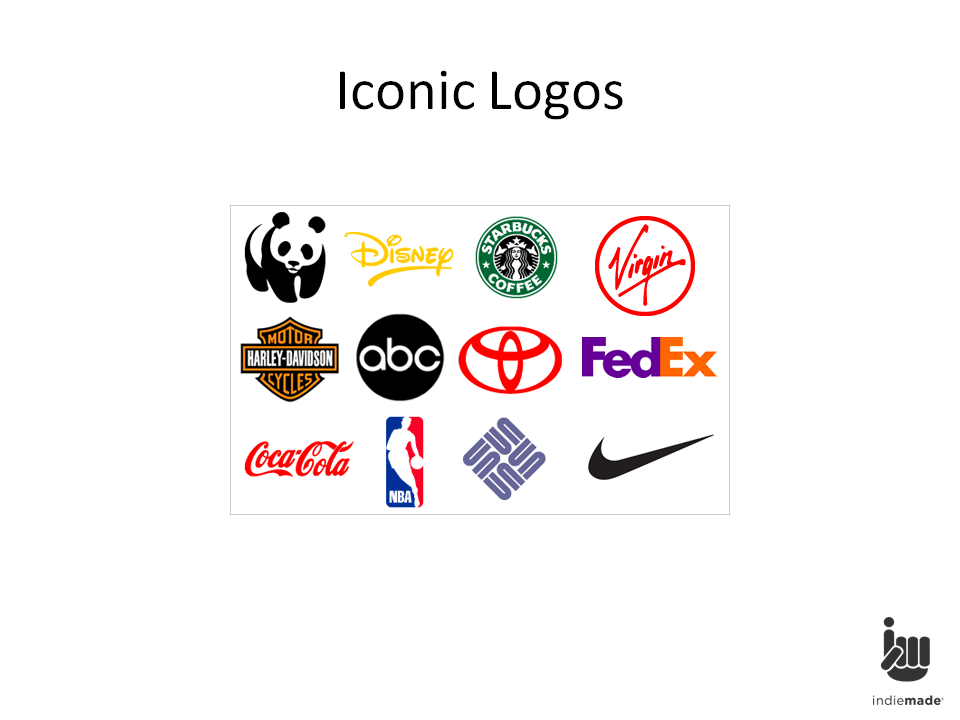
- Iconic Logos - see image 1
PHASE 2 - Use your website to build a strong online presence
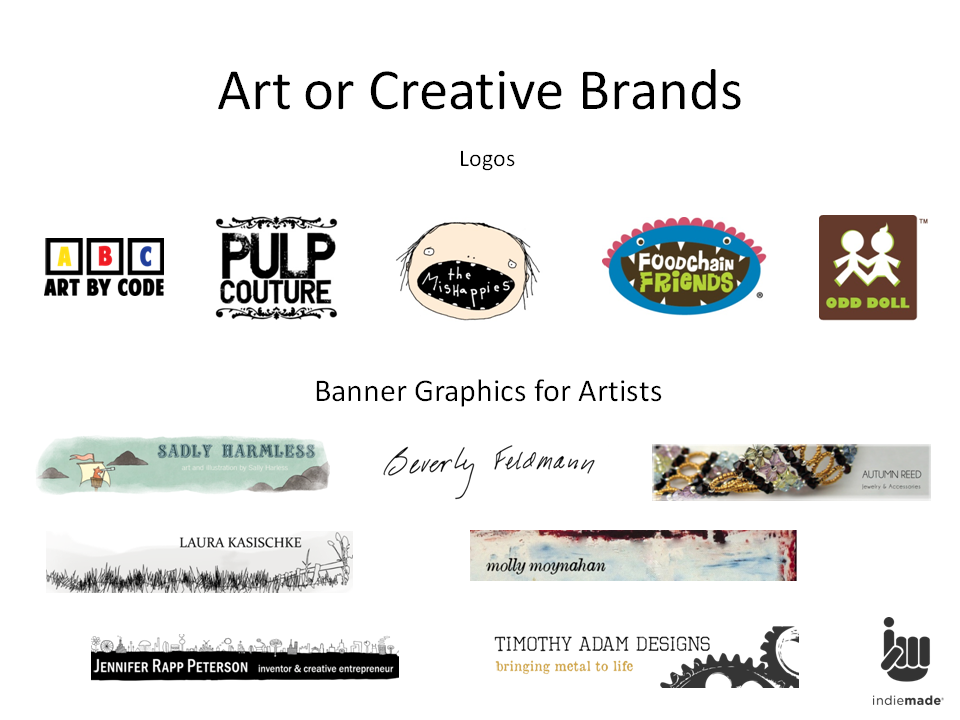
Art or Creative Brands - see image 2 for creative brands and artist banners
- Your website is your brand’s home online.
- Your website will become your brand’s hub online.
- Shared sites only work for shared sites.
- It is no longer cost or technically prohibitive to have a feature rich, branded website.
- You cannot afford NOT to have one.
- You don’t need a graphic designer or web developer.
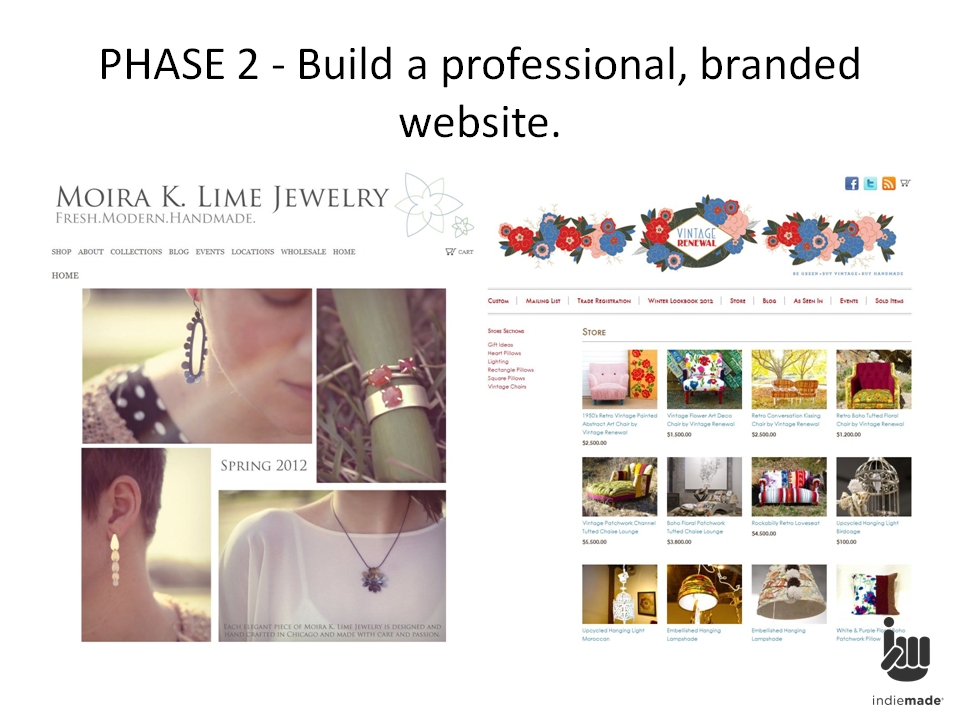
If you are taking the time to create a website, build the right website. see image 3
- Static websites don’t cut it.
- Your website’s platform must be fluid and easily editable by you/your team.
- You need complete control.
- Must be constructed specifically to support every kind of content you need hosted on your website.
- It should be the source for sharing and engaging online
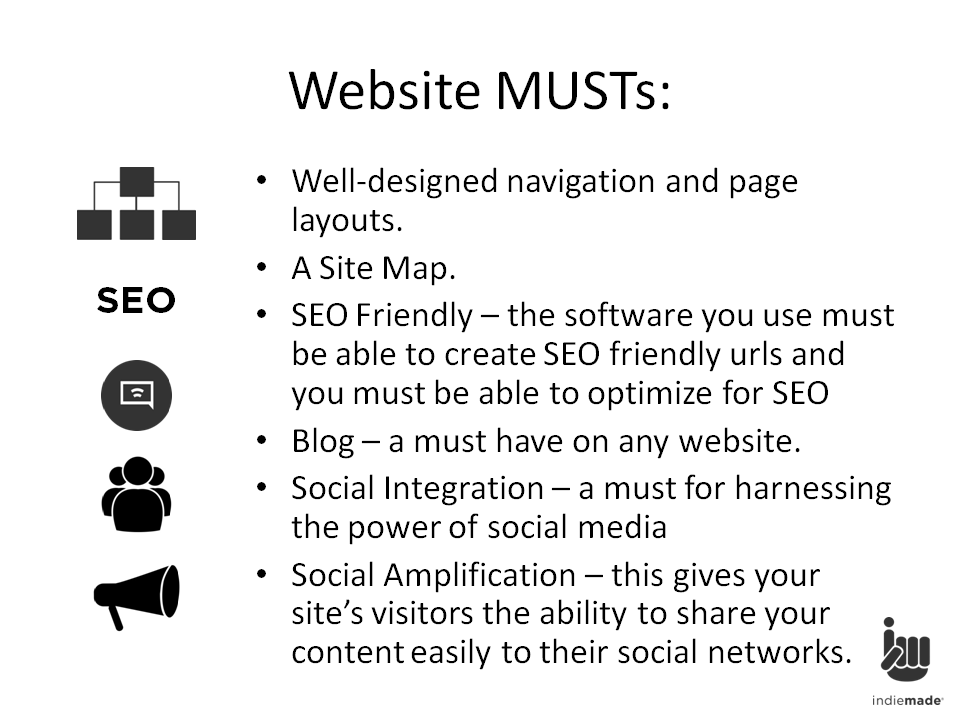
Website MUSTs images 4 and 5:
- Well-designed navigation and page layouts.
- A Site Map.
- SEO Friendly – the software you use must be able to create SEO friendly urls and you must be able to optimize for SEO
- Blog – a must have on any website.
- Social Integration – a must for harnessing the power of social media
- Social Amplification – this gives your site’s visitors the ability to share your content easily to their social networks.
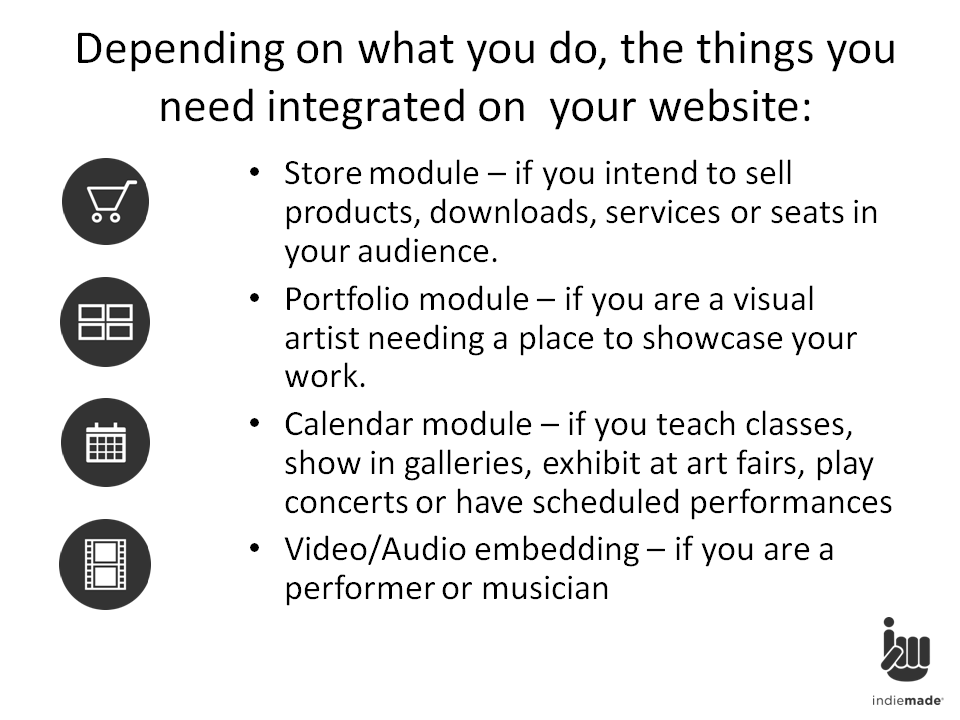
- Depending on what you do, the things you need integrated on your website:
- Store module – if you intend to sell products, downloads, services or seats in your audience.
- Portfolio module – if you are a visual artist needing a place to showcase your work.
- Calendar module – if you teach classes, show in galleries, exhibit at art fairs, play concerts or have scheduled performances
- Video/Audio embedding – if you are a performer or musician
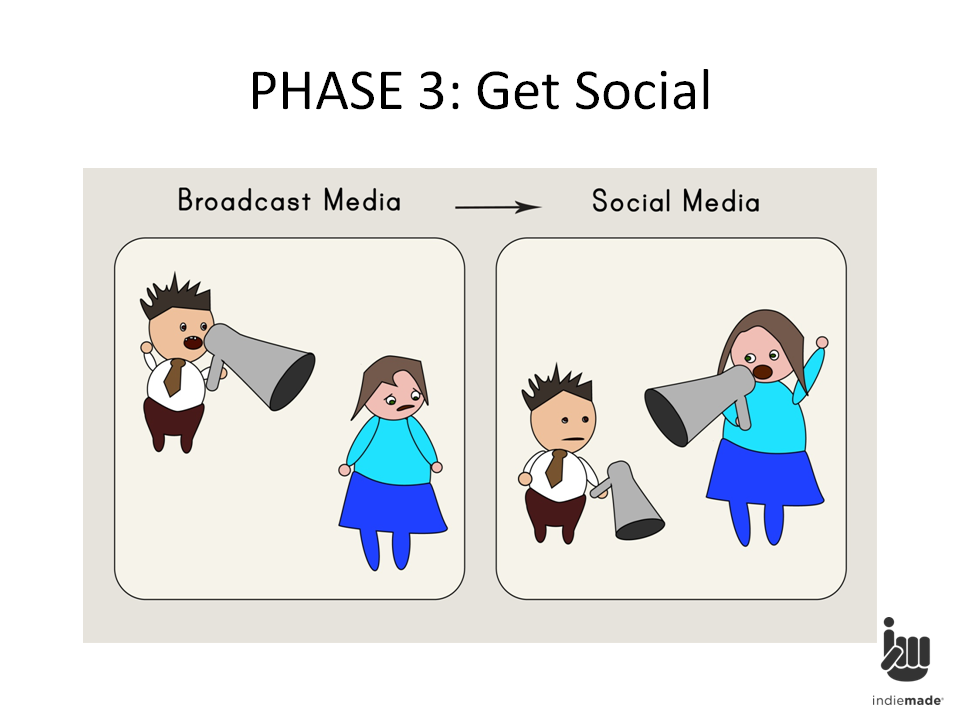
PHASE 3: Get Social - see image 6
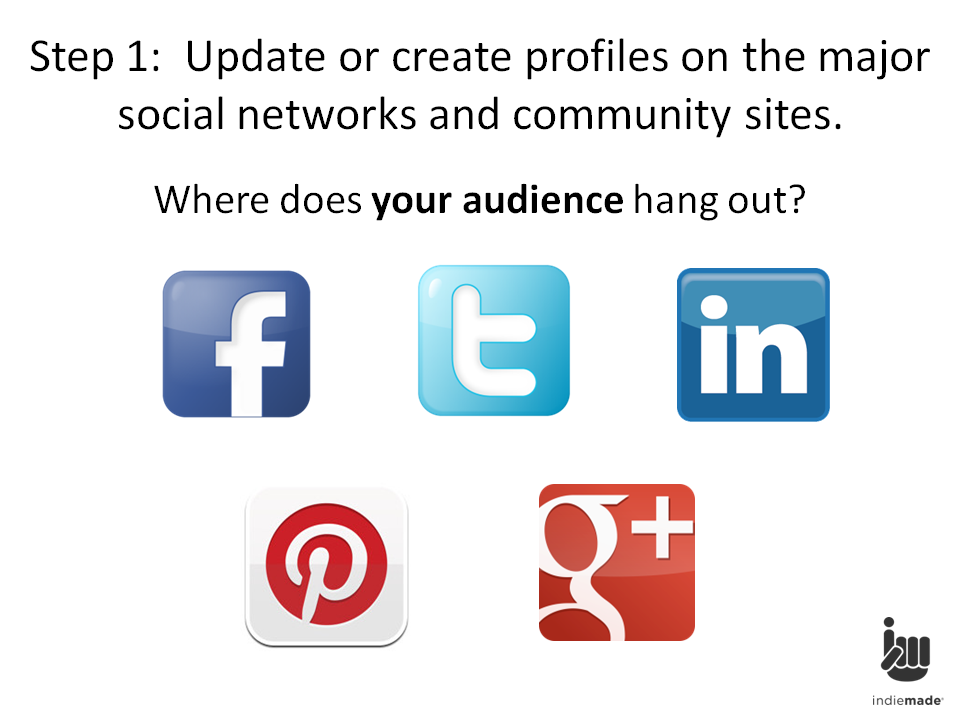
Step 1: Update or create profiles on the major social networks and community sites. - see image 7
Where does your audience hang out?
Step 2: Listen and learn
- Listen to the social conversation
- Learn the vernacular.
- What information are people looking for?
- What can I bring to the table?
- How am I different?
- What’s my perspective?
PHASE 4: Build a Strong Brand Online by Content Marketing - see image 7
Let’s back up.
- Why do people go online? see image 8
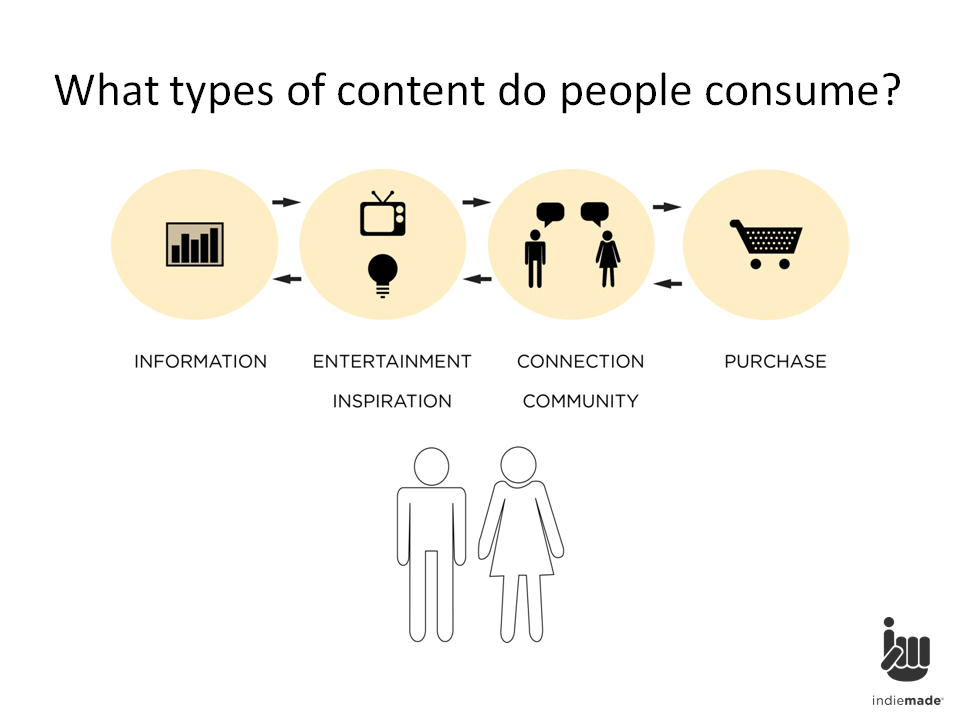
- What types of content do people consume? see image 9
So your job is to create content.
- Content marketing plays to the strength of creatives.
- Even playing field – the democratization of marketing.
- Artists are expressive – always generating content.
- It keeps you creating and in touch with your “muse.”
- You don’t have to post often, just consistently. Even once a week, once a month.
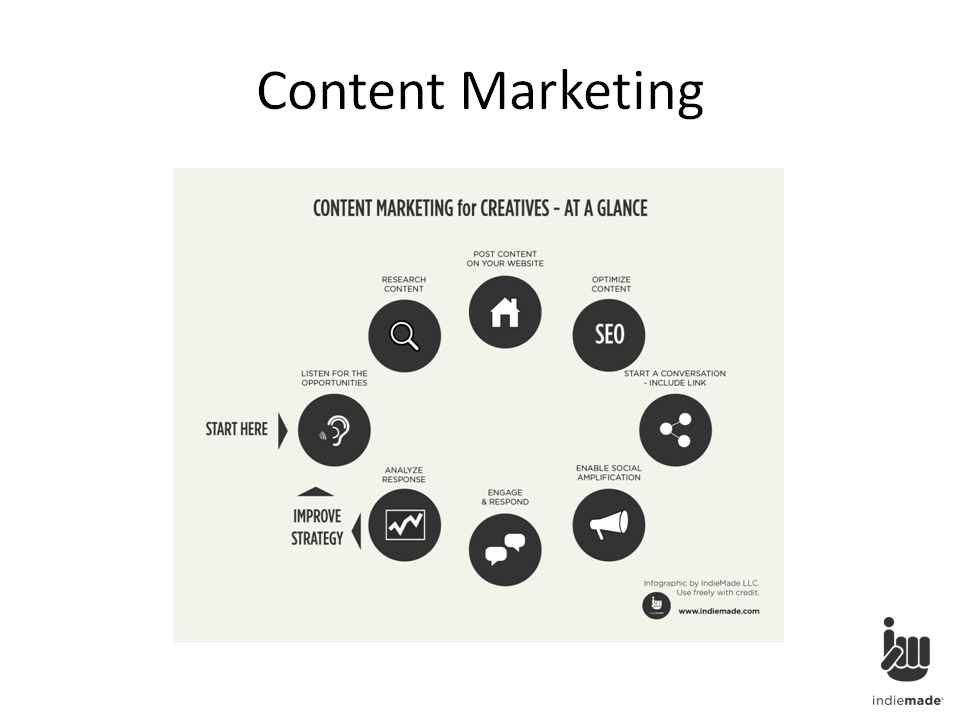
Content Marketing see image 10
- What content can artists’ create?
- Your work - Images, video or writing.
- Write about your work.
- Write about you – behind the scenes.
- Share resources and link to them
- Write about what you know.
About preparing your content:
- Write with your audience in mind.
- Don’t be perfect.
- Use only original content.
- Take the you out of your marketing.
- An editorial “calendar” helps.
Share and engage on social platforms
- Start conversations.
- Participate in the community.
- Share links not to just your stuff, but to other resources.
- Ask questions, answer questions.
- LEARN AS YOU GO.
Let’s Review
1. CREATE YOUR BRAND
2. BUILD A PROFESSIONAL WEBSITE
3. BECOME ACTIVE ON SOCIAL NETWORKS
4. PRACTICE CONTENT MARKETING